
The Complete Guide to Buying Property in Dubai as a Foreigner

Key Takeaways
- Foreign nationals can legally purchase property in Dubai’s designated freehold areas without being UAE residents.
- Buying property involves selecting a property, signing the Sale and Purchase Agreement, paying applicable fees, and registering ownership with the Dubai Land Department.
- Buyers should budget for transaction costs in addition to the purchase price, including the Dubai Land Department transfer fee and trustee registration fees.
- Choosing the right community is just as important as choosing the right property.
- Working with a RERA-licensed brokerage helps reduce legal and financial risks.
- Both ready and off-plan properties can suit foreign investors depending on their objectives.
Can Foreigners Buy Property in Dubai?
Yes. Foreign nationals can legally buy property in Dubai without holding UAE citizenship or residency, provided the property is located within a government-designated freehold area. Buyers enjoy full ownership rights over eligible properties and can sell, lease, inherit, or mortgage them in accordance with Dubai’s real estate regulations.
For many international investors, the biggest challenge is not whether they can buy property, but understanding where they can buy, how the purchase process works, and which communities align with their investment goals. This guide answers those questions step by step.
Dubai’s Property Market at a Glance
Dubai remains one of the world’s most active real estate markets, attracting buyers from across Europe, Asia, North America, and the GCC. Demand is supported by population growth, business expansion, tourism, and continued investment in infrastructure and master planned communities.
The market offers a diverse range of properties, from entry-level apartments in Jumeirah Village Circle to ultra-luxury villas on Palm Jumeirah. Buyers can also choose between completed homes that generate immediate rental income and off-plan developments with developer payment plans.
For international investors, Dubai combines transparent property registration, modern digital services, and a regulated real estate sector overseen by the Dubai Land Department and the Real Estate Regulatory Agency (RERA).
Who Can Buy Property in Dubai?
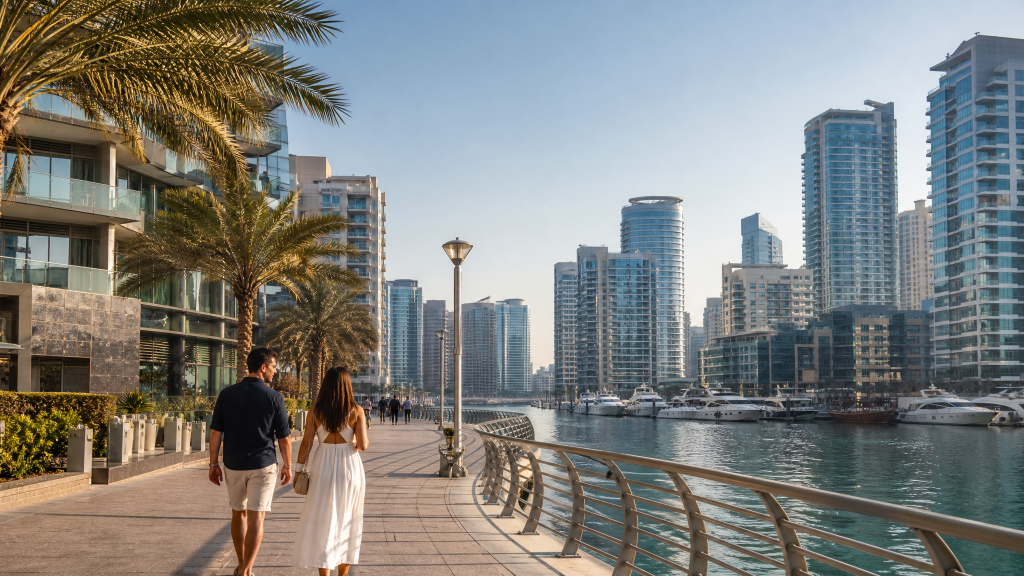
Any foreign national can purchase property in designated freehold areas regardless of nationality. Residency in the UAE is not required to own eligible real estate, although additional documentation may be necessary depending on the transaction and financing method.
Foreign buyers commonly include:
- Individual investors
- Families relocating to Dubai
- Business owners
- Expats already living in the UAE
- Overseas buyers purchasing remotely
- Buyers seeking vacation or second homes
If financing is required, eligibility and lending criteria will depend on the bank’s mortgage policies.
Where Can Foreigners Buy Property?
Foreign ownership is permitted within Dubai’s designated freehold communities. These neighborhoods represent some of the city’s strongest residential and investment markets.
Popular freehold communities include:
- Downtown Dubai
- Dubai Marina
- Palm Jumeirah
- Business Bay
- Dubai Hills Estate
- Dubai Creek Harbour
- Jumeirah Village Circle
- Dubai South
- Arabian Ranches
- Emaar Beachfront
- Mohammed Bin Rashid City
Each community offers different advantages. Downtown Dubai attracts buyers seeking premium urban living, while Dubai Hills Estate appeals to families looking for larger homes. Dubai Marina remains popular among investors because of its established rental market, and Dubai South continues to attract attention due to long-term infrastructure development.
For a detailed breakdown of these communities, readers can explore FGREALTY’s Freehold Areas in the UAE guide and individual community pages.
How Does the Buying Process Work?

Buying property in Dubai follows a structured legal process regulated by the Dubai Land Department. While individual transactions vary, most purchases follow the same sequence.
Step 1. Define Your Budget
Start by determining your total investment budget rather than focusing only on the property’s purchase price.
Remember to include:
- Registration fees
- Brokerage commission
- Trustee fees
- Service charges
- Mortgage costs if financing is required
Understanding your complete budget helps narrow suitable communities and property types.
Step 2. Choose the Right Property
Select a property that matches your objectives.
Ask yourself:
- Is this for rental income?
- Will I live here?
- Am I investing for long-term appreciation?
- Do I prefer a ready property or an off-plan project?
Professional buyers evaluate more than price. Community infrastructure, future development, transportation, schools, and long-term demand all influence investment performance.
Step 3. Verify the Property
Before signing any agreement, verify:
- Ownership status
- Developer reputation
- Property title
- Outstanding service charges
- Completion status
- Community regulations
FGREALTY recommends conducting thorough due diligence before committing to any purchase, especially for overseas investors purchasing remotely.
Step 4. Sign the Sale and Purchase Agreement
Once both parties agree on the terms, they sign the Sale and Purchase Agreement (SPA), outlining the purchase price, payment schedule, and transaction conditions.
This agreement forms the legal foundation of the transaction.
Step 5. Register the Property
Ownership officially transfers only after the transaction is registered with the Dubai Land Department through an authorized Real Estate Registration Trustee Center. Buyers receive an electronic title deed upon successful registration for completed properties.
Required Documents for Foreign Buyers
The documents required depend on whether you are buying a ready property, an off-plan unit, or financing the purchase with a mortgage. Most cash purchases require only a few essential documents, while financed transactions involve additional bank documentation.
Typically, buyers should prepare:
- A valid passport
- UAE visa and Emirates ID (if applicable)
- Proof of address (for some financial institutions)
- Proof of funds or bank statements when requested
- Mortgage pre-approval (if financing)
- Signed Sale and Purchase Agreement (SPA)
If purchasing remotely, a legally executed Power of Attorney may be required for an authorized representative to complete parts of the transaction on your behalf.
What Does It Cost to Buy Property in Dubai?
The purchase price is only one part of your investment. Buyers should budget for transaction costs before completing a purchase.
Common costs include:
- Dubai Land Department (DLD) transfer fee: 4% of the property’s purchase price. This fee is payable during the ownership transfer process.
- Registration Trustee fee: The fee depends on the transaction type and value, as set by the Dubai Land Department.
- Real estate brokerage commission: Commonly around 2% of the purchase price, although commissions vary by brokerage agreement.
- Mortgage registration fee: Applicable when financing through a UAE lender.
- Property valuation fee: Required by most banks for financed purchases.
- Annual service charges: Paid by property owners to maintain shared facilities and common areas. Charges vary by community and building.
Before making an offer, request a complete cost breakdown so there are no unexpected expenses at closing.
Should You Buy a Ready or Off Plan Property?
The right choice depends on your investment objectives, budget, and timeline.
Ready Property
A completed property allows buyers to take ownership immediately after registration.
It is generally suitable for investors who want:
- Immediate rental income
- Established communities
- Existing market pricing
- Physical inspection before purchase
Off-Plan Property
Off-plan properties are purchased directly from developers before construction is completed.
Potential advantages include:
- Flexible developer payment plans
- Access to newly launched communities
- Modern layouts and amenities
- Potential capital appreciation before handover
However, investors should carefully evaluate the developer’s track record, project approvals, estimated completion timeline, and escrow protections before committing to an off-plan purchase.
Common Mistakes Foreign Buyers Should Avoid
Many first-time investors focus only on the property’s asking price while overlooking other factors that affect long-term performance.
Avoid these common mistakes:
- Choosing a property without researching the surrounding community.
- Ignoring annual service charges.
- Purchasing solely based on marketing materials.
- Not verifying the developer or seller.
- Underestimating transaction costs.
- Failing to review the Sale and Purchase Agreement carefully.
- Assuming every area in Dubai is freehold.
- Selecting a property that does not match your investment strategy.
Successful investors evaluate both the property and the neighborhood before making a decision.
How FGREALTY Can Help
Buying property in Dubai involves more than selecting a home. Buyers also need reliable market intelligence, neighborhood expertise, and guidance throughout every stage of the transaction.
FGREALTY UAE assists international investors, homeowners, and businesses by providing:
- Verified residential and commercial listings.
- Guidance on Dubai’s leading freehold communities.
- Market insights based on buyer demand and pricing trends.
- Support when comparing ready and off-plan opportunities.
- Assistance throughout the buying process, from property selection to transaction coordination.
- Relocation guidance for buyers planning to live or establish a business in Dubai.
Whether you are searching for an apartment in Downtown Dubai, a waterfront residence in Dubai Marina, a family villa in Dubai Hills Estate, or an investment opportunity in Dubai South, FGREALTY helps you identify properties aligned with your goals through informed, data-driven guidance.
FAQs
Q: Can I buy property in Dubai without living in the UAE?
A: Yes. Foreign nationals can purchase eligible freehold property without being UAE residents. Many transactions can also be completed remotely through authorized representatives, subject to legal requirements.
Q: How long does it take to complete a property purchase?
A: The timeline depends on whether the property is ready or off-plan, whether financing is involved, and how quickly documentation is completed. Cash purchases of ready properties are generally completed faster than mortgage transactions.
Q: Can foreigners obtain a mortgage in Dubai?
A: Yes. Many UAE banks offer mortgages to eligible foreign buyers. Lending criteria, minimum down payments, income requirements, and loan terms vary between financial institutions.
Q: Is buying directly from a developer different from buying on the resale market?
A: Yes. Off-plan purchases involve developer payment schedules and future handover dates, while resale transactions transfer ownership of an existing property through the Dubai Land Department after all legal requirements are met.