
Dubai Real Estate Developer Guide: Who Are the Leading Developers?
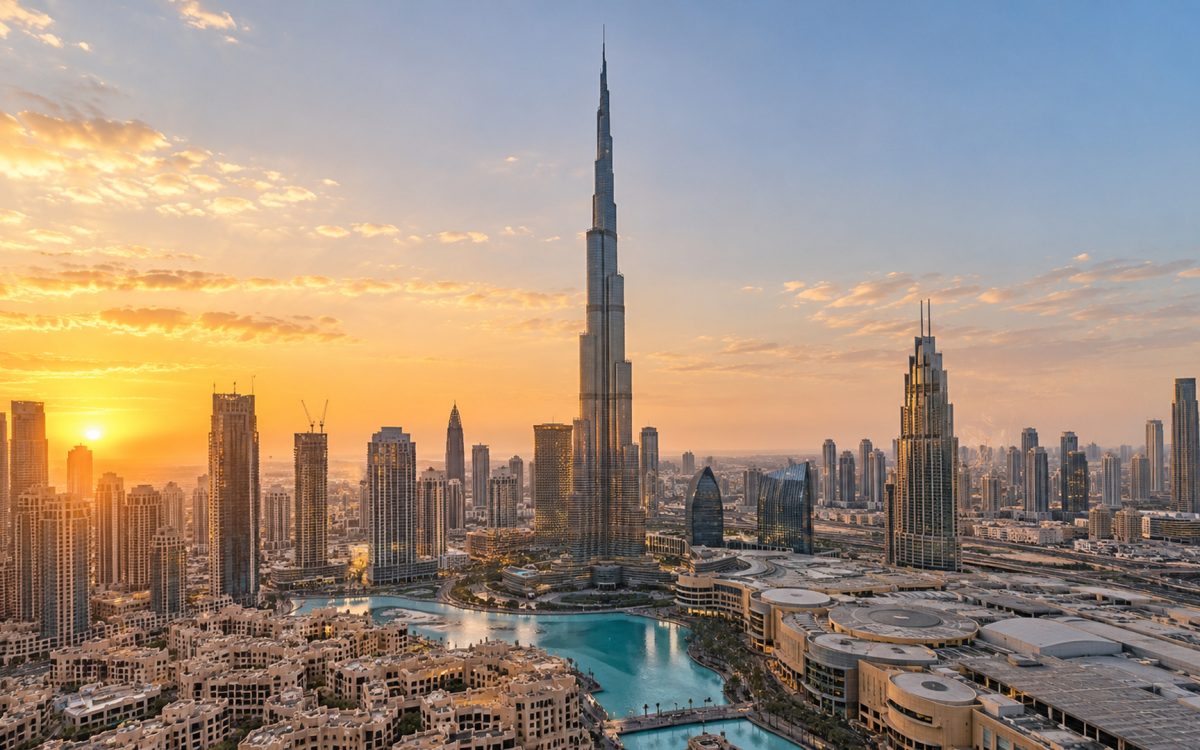
Key Takeaways
- Dubai’s major developers operate across luxury residences, master-planned communities, waterfront projects, villas, townhouses, and apartments.
- Emaar reported AED 80.4 billion in property sales in 2025, including AED 71.1 billion through Emaar Development.
- Dubai Holding Real Estate brings Nakheel, Meraas and Dubai Properties together under one platform, with more than 106,700 residential units and land plots delivered across its portfolio.
- Sobha Realty reported AED 30 billion in sales in FY2025, up 30% from 2024.
- Aldar’s expanded Dubai partnership with Dubai Holding includes almost 14,000 new homes across two projects with a combined gross development value above AED 38 billion.
- DLD has formal registration-system partnerships with developers including Emaar, DAMAC, Binghatti, Aldar, Sobha Realty, Azizi and Danube.
- Developer reputation matters, but buyers should also assess the specific project, escrow arrangements, construction progress, SPA, service charges, location, and competing supply.
Who Are the Major Real Estate Developers in Dubai?
Dubai’s major developers include Emaar Properties, Dubai Holding Real Estate’s Nakheel, Meraas and Dubai Properties brands, DAMAC Properties, Sobha Realty, Aldar Properties, Wasl, Binghatti, Azizi Developments and Ellington Properties.
There is no official government ranking that declares one company the “best” developer in Dubai. A more useful approach is to look at development scale, delivered communities, current projects, financial capacity, regulatory registration, and the type of property each developer focuses on.
Dubai Land Department’s own initiatives provide useful evidence of the industry’s established participants. In 2024, DLD signed strategic agreements with Emaar, DAMAC, Binghatti, Aldar, Sobha Realty, Azizi Developments and Danube to allow those developers to use DLD registration systems for real estate transactions.
DLD’s current First-Time Home Buyer program also lists developers including Emaar, DAMAC, Danube, Dubai Properties, Ellington, Meraas, Nakheel, Wasl, Binghatti, Azizi, and others among its partner developers.
Which Developer Is Best Known for Large Master-Planned Communities?
Emaar and Dubai Holding Real Estate have extensive master-planned portfolios spanning multiple Dubai communities and property types.
Emaar Properties
Emaar is behind major Dubai destinations including Downtown Dubai, Dubai Hills Estate, Dubai Creek Harbour, Arabian Ranches, Emaar Beachfront, Dubai Marina, The Valley and Emaar South. Its current portfolio includes apartments, villas and townhouses across established and developing communities.
Emaar reported AED 80.4 billion in property sales in 2025, up 16% year over year. Emaar Development generated AED 71.1 billion in property sales, while UAE property-development revenue across the Group reached AED 36.4 billion. Its UAE development backlog reached AED 134.3 billion at the end of 2025.
For buyers, Emaar is particularly relevant when comparing large, established communities rather than individual towers in isolation.
Examples include:
- Downtown Dubai
- Dubai Hills Estate
- Dubai Creek Harbour
- Arabian Ranches
- Emaar Beachfront
- Emaar South
- The Valley
- The Oasis
Dubai Hills Estate alone spans approximately 11 million square meters and includes an 18-hole championship golf course, 1.45 million square meters of parks and open spaces, a 180,000-square-meter park, a major shopping mall and three schools.
Dubai Holding Real Estate
Dubai Holding Real Estate brings together Nakheel, Meraas and Dubai Properties. The platform reports more than 106,700 residential units and land plots delivered, with approximately 1.6 million people living in its communities.
Its portfolio includes major destinations such as:
- Palm Jumeirah
- Palm Jebel Ali
- Dubai Islands
- Bluewaters
- City Walk
- Madinat Jumeirah Living
- District One
- Dubai Properties communities
Nakheel remains particularly relevant for waterfront development. For example, its Dubai Islands master development covers five islands with more than 60 kilometers of waterfront and over 20 kilometers of beaches.
Meraas focuses on destination-led developments such as City Walk and Bluewaters. Dubai Holding describes Meraas as a design-led developer behind several of Dubai’s major urban destinations.
Which Developers Focus on Luxury and Branded Residences?
Luxury development in Dubai includes both established master developers and private developers with specialized portfolios.
DAMAC Properties
DAMAC develops residential communities, branded residences, and master-planned projects in Dubai. Its portfolio includes DAMAC Hills, where the developer’s official materials describe a 42-million-square-foot community containing villas, mansions, and apartments around the Trump International Golf Club Dubai.
The developer also has a substantial branded-residence portfolio. For buyers, the key consideration is whether a branded project suits the intended use and whether its pricing is justified by the location, specifications, operating structure, and comparable properties.
Sobha Realty
Sobha Realty is another major Dubai developer with a strong focus on premium residential communities and integrated development.
The developer reported AED 30 billion in sales during FY2025, representing 30% growth over 2024.
Its Dubai portfolio includes developments associated with Sobha Hartland and Mohammed Bin Rashid City, alongside newer projects and master-planned developments.
Sobha also continues to expand community infrastructure. Its official announcement for a new Sobha Hartland mall puts the project cost at AED 210 million.
Which Developers Are Expanding Their Dubai Presence?
Aldar is historically associated with Abu Dhabi, but its Dubai presence has expanded significantly through its partnership with Dubai Holding.
In February 2026, Aldar and Dubai Holding announced an expanded joint venture involving almost 14,000 new homes across two Dubai projects, with a combined gross development value exceeding AED 38 billion. The projects include a family-oriented community on the D54 corridor and a luxury waterfront development at Palm Jebel Ali.
Aldar reported AED 40.6 billion in group sales in 2025, with UAE sales contributing AED 35.5 billion. Overseas and expatriate buyers accounted for AED 27.4 billion of its UAE sales, or 77% of the UAE total.
This makes Aldar particularly relevant for international buyers evaluating its growing Dubai pipeline.
Which Developers Offer More Varied Price Points?
Developers such as Binghatti, Azizi, Danube, Wasl and Ellington operate across different parts of Dubai and provide another layer of choice beyond the largest master developers.
Binghatti’s official portfolio spans locations including Business Bay, Jumeirah Village Circle, Jumeirah Village Triangle, Al Jaddaf, Dubai Science Park, Meydan and Dubai Silicon Oasis, with projects ranging from premium residential buildings to branded luxury developments.
Wasl also has a mixture of residential, commercial and mixed-use developments. Its current freehold pipeline includes projects such as Avenue Park Towers II, Cedarwood Estates and Boulevard Park.
Ellington focuses heavily on design-led residential development. Its 2026 launch of Everly Place in Mohammed Bin Rashid City, for example, comprises 209 residences across several apartment configurations.
For an investor, this group can be relevant when the objective is to compare specific projects at different entry points rather than focus only on large master communities.
How Should You Compare Dubai Developers?
A developer’s name is an important starting point, but it should never replace project-level due diligence. Two projects from the same developer can have different locations, construction timelines, service charges, layouts, payment structures, and resale markets.
Before reserving a property, check:
- Developer track record: Look at completed projects, not only announced launches.
- Project registration: Verify the project through DLD.
- Escrow arrangements: Confirm the approved project structure for off-plan purchases.
- Construction progress: Compare actual progress with contractual milestones.
- SPA terms: Review payment schedules, handover provisions, and default clauses.
- Location: Assess access to roads, public transport, schools, retail and employment centers.
- Competing supply: Identify completed and planned developments nearby.
- Service charges: Check applicable approved charges for completed jointly owned properties.
- Exit market: Consider who is likely to buy or rent the property later.
DLD’s project-status services provide buyers with an official route to verify project information, including developer and completion-related details.
Does the Developer Matter More for Off Plan or Ready Property?
Developer selection generally matters more when buying off plan because the buyer commits capital before receiving the completed property. Construction progress, escrow arrangements, delivery history, and contractual protections become central parts of the decision.
With a ready property, buyers can inspect the actual unit, building, common areas, and surrounding neighborhood. They can also assess existing rental performance and occupancy conditions more directly.
That does not make developer selection irrelevant for ready properties. Building management, maintenance history, service charges, and the condition of the completed development can still materially affect ownership costs.
What Does Dubai’s Market Size Mean for Developer Selection?
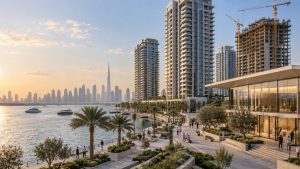
Dubai’s scale makes developer due diligence increasingly important. DLD reports that the emirate recorded approximately AED 917 billion in real estate transaction value in 2025, reflecting the depth of activity across the market.
In Q1 2026 alone, DLD reported AED 252 billion in real estate transactions across 60,303 transactions, while real estate investments reached AED 173 billion across 57,744 investments.
A large market creates more choice, but it also creates more projects to compare. Buyers should therefore avoid selecting a developer solely because its name is familiar.
How FGREALTY Helps Buyers Compare Dubai Developers
FGREALTY helps international buyers move from developer selection to project selection.
Our support can include:
- Comparing verified listings across developers
- Checking project and community fundamentals
- Comparing ready and off-plan opportunities
- Assessing property types and layouts
- Reviewing payment-plan considerations
- Comparing locations and competing supply
- Supporting the Dubai buying and registration process
- Providing relocation guidance for international buyers
- Helping businesses evaluate commercial property opportunities
For example, a buyer considering an Emaar project in Dubai Hills Estate, a Nakheel development on Dubai Islands, a Meraas project in City Walk, or a Sobha development in Mohammed Bin Rashid City should compare more than the developer’s reputation.
The project location, price per square foot, unit configuration, service charges, payment structure, completion status, and surrounding supply can produce very different investment outcomes.
FAQs
Q: How many real estate developers are there in Dubai?
A: There is no single useful official figure for the number of developers operating across every category and project type. DLD maintains developer and project registration systems, while its current programs identify numerous registered development partners.
Q: Is a developer’s previous project relevant when buying a new property?
A: Yes, but it should be one part of the assessment. Previous projects can provide evidence about construction quality, community management, and delivery, while the new project’s own registration, contract, location, and construction status require separate verification.
Q: Are Dubai developers regulated by the government?
A: Dubai’s real estate sector is regulated by the Dubai Land Department, which oversees registration, development-related processes, and real estate transactions. Buyers should still verify the specific developer and project through DLD rather than relying solely on marketing material.
Q: Can international buyers purchase directly from a Dubai developer?
A: Foreign nationals can purchase eligible property in designated freehold areas of Dubai, including non-residents. Whether a specific development is available to the buyer and which ownership structure applies should be verified before purchase.
Q: Does buying from a major developer guarantee an investment return?
A: No. A developer’s track record does not guarantee future appreciation or rental income. The investment outcome also depends on purchase price, location, supply, property specifications, financing, operating costs, and future market conditions.
Q: Should I choose the developer before choosing the Dubai community?
A: Not necessarily. For many buyers, the community and property fundamentals should come first. Once the target location, property type, and budget are established, comparing developers with projects that fit those requirements produces a more meaningful shortlist.